Influence: The Psychology of Persuasion
Robert B. Cialdini
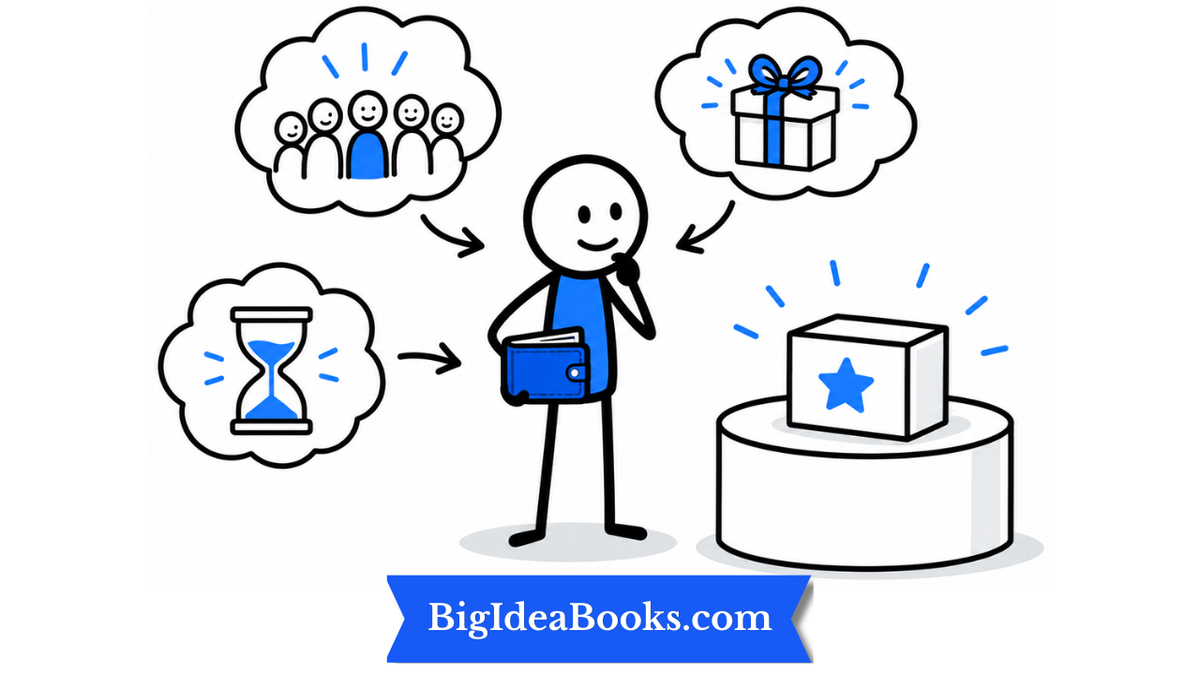
Many decisions feel deliberate even when they aren't. When life gets complicated, your mind relies on shortcuts that help you decide quickly who to trust, what to buy, and how to respond. Those shortcuts are useful, but they can also make your behavior surprisingly predictable. Understanding that predictability makes it much easier to recognize when you're being influenced.
Recognize the Mental Shortcuts That Make Persuasion Work
You can't carefully analyze every decision you make. There are too many choices, too much information, and too little time. Instead, your mind looks for signals that allow it to reach a conclusion quickly.
Most of the time, those shortcuts work well. A higher price might suggest better quality. A reason for a request might suggest that the request is justified. A person who appears knowledgeable might deserve more attention than someone who doesn't.
The problem begins when the signal becomes more influential than the information behind it. In one example, people waiting to use a copy machine were far more likely to let someone cut in line when the requester supplied a reason. Surprisingly, compliance remained almost as high even when the reason offered little meaningful justification. The presence of a reason itself helped trigger the response.
That distinction matters because persuasion often works by activating an automatic response before you examine whether it makes sense in the specific situation. You don't need to stop using shortcuts. You need to recognize the moments when a shortcut is doing too much of your thinking for you.
What makes a mental shortcut vulnerable to manipulation?
Recognize When Reciprocity Creates Unwanted Obligation
Receiving something from another person can make you feel that you should give something back. This tendency toward reciprocity helps relationships and communities function because people can give to one another with some expectation that generosity will eventually be returned.
But reciprocity doesn't require you to ask for the original favor.
That creates an opening for influence. Someone can give you something first and allow your own sense of obligation to do the rest. A small gift, free sample, complimentary item, or favor can make the next request harder to refuse because saying no now feels less like rejecting a request and more like refusing to repay a debt.
In one study, participants who unexpectedly received a small Coke from another person later bought substantially more raffle tickets from him than participants who hadn't received the drink. The original favor even influenced some people who said they didn't particularly like the person asking them to buy the tickets.
The useful lesson isn't to become suspicious of generosity. It's to separate genuine favors from transactions disguised as favors. When someone gives you something and then asks for something in return, judge the second request on its own merits. A sincere favor may deserve generosity in return. A deliberate attempt to create obligation doesn't automatically deserve compliance.
What is the best defense when a favor makes you feel pressured to comply with a later request?
Notice When Small Commitments Begin Shaping Bigger Decisions
Once you take a position, you naturally want your later behavior to remain consistent with it. That tendency can make life easier because you don't have to reconsider every decision from the beginning. You can use what you've already decided as a guide for what to do next.
Commitment makes this tendency especially powerful.
Imagine agreeing to one very small request. On its own, the decision might seem insignificant. But once you've taken the action, it can subtly influence how you see yourself: perhaps as a supporter, customer, participant, or someone who has agreed with a particular position.
The next request no longer arrives on completely neutral ground. Accepting it may feel consistent with the person you've already shown yourself to be.
Written and public commitments can be particularly strong because they give the earlier decision more weight. The effect doesn't necessarily depend on someone forcing you to continue. You may supply your own pressure because reversing course now feels inconsistent with what you've already said or done.
This is why a small yes deserves more attention when it appears to be the beginning of a sequence. Before agreeing, consider not only what you're being asked to do now but also what that commitment might make easier to ask of you later.
Why can a small initial commitment make a larger later request easier to accept?
Use Social Proof Carefully When You're Uncertain
When you're not sure what to do, watching other people can seem like a sensible way to find the answer. If everyone else appears to be choosing the same restaurant, buying the same product, laughing at the same joke, or responding to a situation in the same way, their behavior provides a convenient clue.
That clue becomes especially powerful when the situation itself is ambiguous. If you don't know what the correct response is, other people's behavior can begin to look like evidence that they know something you don't.
But they may be looking at you for exactly the same reason.
This creates a weakness in social proof. A group can appear confident even when the individuals within it are uncertain. People may hesitate because everyone else is hesitating, then interpret that shared hesitation as evidence that doing nothing is the appropriate response.
Similarity strengthens the effect. You're especially likely to use someone's behavior as a guide when that person seems like you. That's one reason endorsements from seemingly ordinary or relatable people can be persuasive: their choices feel more relevant to your own.
Social proof is useful information, but it shouldn't become a substitute for judgment. When popularity begins influencing you, ask what the crowd actually proves. Sometimes other people's behavior contains valuable information. Other times, it only proves that many people are responding to the same uncertainty.
When is social proof especially likely to influence your behavior?
Try the Big Ideas
- Catch one automatic response before acting on it. The next time a price, title, reason, popularity claim, or other familiar cue makes a decision feel obvious, give yourself a moment to identify the cue. Then ask whether it actually tells you enough to make the decision.
- Separate gifts from requests. If someone gives you something and later asks for something in return, mentally treat those as two separate events. Ask yourself whether you would agree to the request if the earlier favor had never happened.
- Look one step beyond a small commitment. Before saying yes to an easy initial request, consider what might logically follow it. You don't need to reject harmless commitments, but you should notice when a small agreement could establish a position you'll later feel pressure to maintain.
- Question what popularity actually proves. When ratings, testimonials, trends, or other people's behavior influence a decision, identify what information they genuinely provide. If you're uncertain, don't assume the crowd has independently reached a better conclusion than you have.
Key Takeaways
Persuasion often works because ordinary mental shortcuts turn certain cues into powerful signals. A favor can feel like a debt, a small commitment can shape the next decision, and other people's behavior can seem like evidence when you're uncertain. The goal isn't to eliminate these tendencies—they often make everyday life easier—but to recognize when they're guiding you and decide whether the response they encourage actually serves you.