Essentialism
Greg McKeown
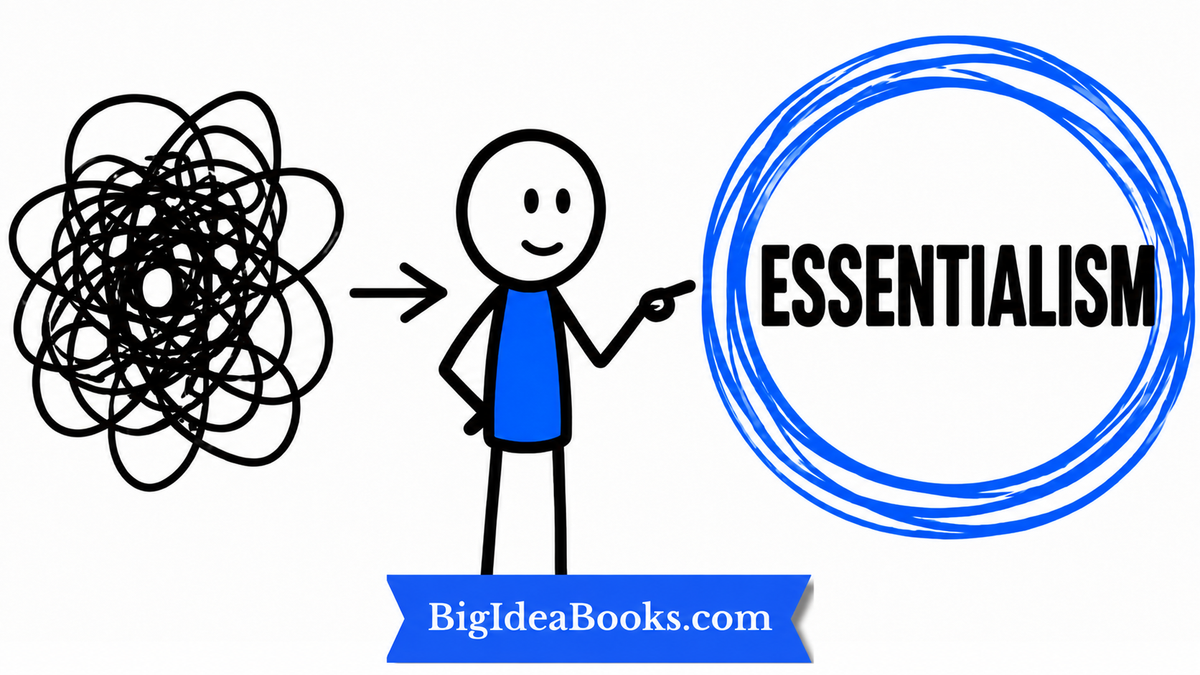
Being busy can feel productive even when very little of what you're doing truly matters. The problem isn't always that you need more time, more discipline, or a better way to squeeze another task into the day. Sometimes the real problem is that too many things have been allowed to compete for your attention in the first place. Essentialism offers a different approach: identify what matters most, remove what doesn't, and create enough space to do the important things exceptionally well.
Do Less, but Do It Better
Essentialism begins with a simple but demanding idea: you can't do everything well. Time and energy are limited, which means choosing one direction inevitably means giving less attention to another. Trying to avoid that reality doesn't eliminate the trade-off. It simply allows the trade-off to happen without your deliberate choice.
The essentialist response is to stop treating every opportunity, responsibility, and possibility as equally important. Instead of making a little progress in many directions, you deliberately concentrate your effort on the things that matter most. The goal isn't to become inactive. It's to become more selective about where your activity is directed.
This also means accepting trade-offs rather than asking how you can somehow fit everything in. When you commit your resources to one priority, you are choosing not to use those same resources somewhere else. That can feel uncomfortable, especially when several options are attractive. But refusing to choose usually creates a different outcome: your attention becomes divided, your standards drop, and none of the competing priorities receives your best work.
"Less but better" turns limitation into an advantage. Once fewer things are competing for your attention, you can give the remaining ones more thought, care, and energy. The point isn't to have less merely for the sake of having less. It's to make room for better.
What best describes the essentialist approach to competing priorities?
Use Strict Criteria to Decide What Matters
Knowing that you should focus on what matters is easier than deciding what actually qualifies as important. Almost anything can seem worth keeping once you start searching for reasons to justify it.
That is why essentialism calls for stronger selection criteria. Rather than asking whether something has some value, you raise the standard. One approach is the 90-percent rule: identify the most important criterion for a decision and score the option from zero to 100. Anything below 90 is treated as a zero.
The number itself matters less than the thinking behind it. A weak standard makes almost everything look acceptable. A demanding standard forces you to distinguish between something that is merely good and something that is genuinely important.
The same principle can be expressed more simply: if it isn't a clear yes, treat it as a clear no. You can also establish minimum and ideal criteria before making a decision. An option must satisfy all of the minimum requirements and enough of the ideal ones to deserve your commitment.
This changes the question from "Could I do this?" to "Is this important enough to deserve what it will cost me?" That cost may include time, attention, energy, or the opportunity to pursue something better. The more selective you become at the decision stage, the less clutter you have to manage later.
Why does essentialism encourage unusually strict criteria when evaluating options?
Say No to Protect What Matters
Recognizing a nonessential commitment doesn't automatically make it disappear. Eventually, essentialism requires a much harder skill: saying no.
This becomes especially difficult when another person is involved. You may worry that declining a request will disappoint someone, create an awkward moment, or harm the relationship. That discomfort can make saying yes seem easier, even when you already know the commitment isn't important enough to deserve your time.
Essentialism asks you to separate the decision from the relationship. Saying no to a request isn't necessarily the same as rejecting the person making it. The immediate discomfort of declining something may be brief, while the consequences of an unnecessary yes can remain with you much longer.
Every yes also has an opportunity cost. Time given to something unimportant can't simultaneously be given to something essential. Failing to decline the wrong opportunity can therefore prevent you from being available for the right one.
Boundaries strengthen this ability to protect what matters. They may look restrictive from the outside, but clear boundaries remove repeated decisions and make expectations easier to manage. A boundary around work, personal time, commitments, or availability establishes in advance what you're willing to allow into a particular part of your life.
The purpose isn't to become inflexible or dismissive. It's to stop requiring your essential priorities to compete endlessly with requests that never should have received equal status.
Why is saying no an important part of essentialism?
Make Essential Work Easier to Execute
Choosing the essential is only part of the process. Once you've identified what matters and removed competing commitments, you still need to make the important work happen consistently.
A common response to difficulty is to push harder. Essentialism takes a different approach: look for the obstacle that is slowing progress and remove it. Instead of repeatedly finding ways to compensate for the same bottleneck, ask what is creating the friction in the first place. Eliminating that obstacle can make the entire system work more smoothly.
Preparation matters for the same reason. Plans often take longer or become more complicated than expected, so an essentialist leaves room for the unexpected rather than building a schedule that works only when everything goes perfectly. The material recommends creating a buffer of 50 percent beyond the time you expect something to take. The larger lesson is to leave enough margin that an ordinary delay doesn't destroy the entire plan.
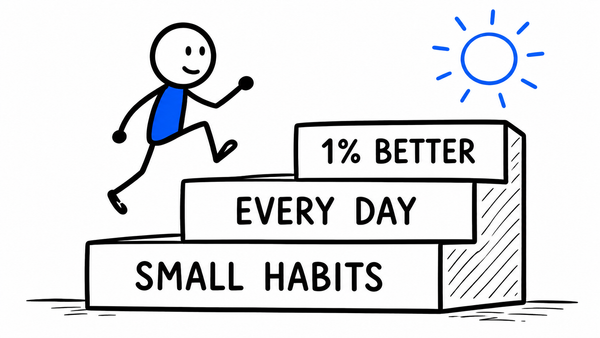
Progress also becomes easier when the essential behavior is built into a routine. You don't need one dramatic burst of effort to move forward. Small wins create momentum, and repeating the right behaviors makes difficult actions easier to continue over time.
This is where essentialism becomes more than a method for deciding what not to do. The end goal is to build a life in which the important things have a reliable path to completion. You choose carefully, remove what interferes, prepare for predictable complications, and create routines that allow meaningful progress to continue one step at a time.
After identifying an essential priority, what approach best supports consistent execution?
Try the Big Ideas
- Choose one area where "less but better" would help. Look at a part of your life where several priorities are competing for the same time or attention. Instead of asking how to fit them all in, decide which one or two deserve your best effort and deliberately reduce your commitment to the rest.
- Raise the standard for your next decision. Before accepting a new task, opportunity, purchase, or commitment, identify the criterion that matters most and evaluate the option against a deliberately high standard. If you're struggling to decide, ask whether it feels like a clear yes rather than searching for enough reasons to prevent yourself from saying no.
- Protect one priority with a boundary. Identify something important that regularly loses time to other people's requests or to competing obligations. Decide in advance what boundary would protect it, then use that boundary to make future decisions easier instead of reconsidering the same conflict every time it appears.
- Remove one source of friction. Choose an important activity that repeatedly feels harder than it should and look for the obstacle slowing it down. Remove or reduce that obstacle, leave more margin for the unexpected, and create a simple routine that helps you make steady progress without relying on a perfect day.
Key Takeaways
Essentialism isn't simply about removing things from your schedule. It's about becoming deliberate about what deserves your limited time, attention, and energy. When you accept trade-offs, use high standards to identify what matters, protect those priorities by saying no, and design routines that make important work easier to execute, doing less becomes a way of accomplishing more of what actually matters.